New York City K12 AI Literacy Curriculum Development in 2026
I. Introduction: A Watershed Moment for the Nation’s Largest School District
In September 2026, New York City Public Schools (NYCPS) — serving nearly 1 million students across more than 1,600 schools — made national headlines with the broadest student-facing generative AI moratorium ever adopted by a U.S. school district (NYC Mayor’s Office). The policy simultaneously bans AI for younger students while mandating formal AI literacy for high schoolers — a deliberate “pause and prepare” strategy that has sparked intense debate among educators, parents, and technologists. This post delves into the development of NYCPS’s AI literacy framework throughout 2026 — from preliminary guidance in March, the establishment of the AI Policy Lab, to the September moratorium, and the anticipated full Playbook by June 2027 (NYC Schools).
II. The Road to 2026: From Banning ChatGPT to Building a Framework
NYCPS was the first major district to ban ChatGPT in early 2023, a move that sparked national debate — and then quickly pivoted to exploring AI’s potential in classrooms (EdWeek). The 2025-26 transition saw a critical look at the previous administration’s AI policy, which was widely criticized as lacking clarity and efficacy (amNY). Under new leadership — Mayor Zohran Mamdani and Chancellor Kamar Samuels — the district began prioritizing developmental appropriateness and human relationships in learning (CNN). Given the absence of a statewide K–12 AI framework from NYSED, NYCPS took the initiative to develop a detailed operational district framework (ZeroBlue AI).
III. The March 2026 Preliminary Guidance: The “Traffic Light” Approach
On March 24, 2026, NYC DOE rolled out their initial AI guidance (NY1). The framework, dubbed the “Traffic Light” model, categorizes AI uses into three zones (The74; Gothamist):
- 🟢 Green (Go): Encouraged uses such as brainstorming lesson plans and teacher training.
- 🟡 Yellow (Caution): Limited student use for research and translation, requiring active oversight.
- 🔴 Red (Stop): Strict prohibitions on decisions related to grading, promotion, and surveillance.
All third-party AI tools must pass NYCPS’s Enterprise Request Management Application (ERMA) data privacy review (NYC Schools). The DOE invited public feedback and collected over 6,500 comments (NYC Schools Facebook).
IV. The AI Policy Lab: A National Hub for District-Level AI Governance
NYCPS and InnovateEDU established the K–12 AI Policy Lab, the nation’s first dedicated district-level lab for AI governance (InnovateEDU). Focused on human-centered AI, the lab aims to promote equity, safety, ethics, and transparency (AI Policy Lab). It acts as a hub connecting more than 15 school districts nationwide (GovTech). Nicole Brownstein of InnovateEDU emphasized the importance of staying at the forefront of technological change (GovTech).
V. September 2026: The Moratorium and Screen Time Policy
The official moratorium was announced on September 2, 2026, at The Brooklyn Steam Center (NYC Mayor’s Office). It imposes a one-year ban on student-facing AI tools for grades 2K through 8, affecting about 600,000 students (edCircuit). Companion chatbots are also banned across all grade levels, including high school (Psychology Today). In addition, the policy caps screen time based on grade level (NYC Schools). Specific exceptions exist for students with disabilities and other learning needs (Politico).
VI. The High School AI Literacy Program: 90 Minutes per Year
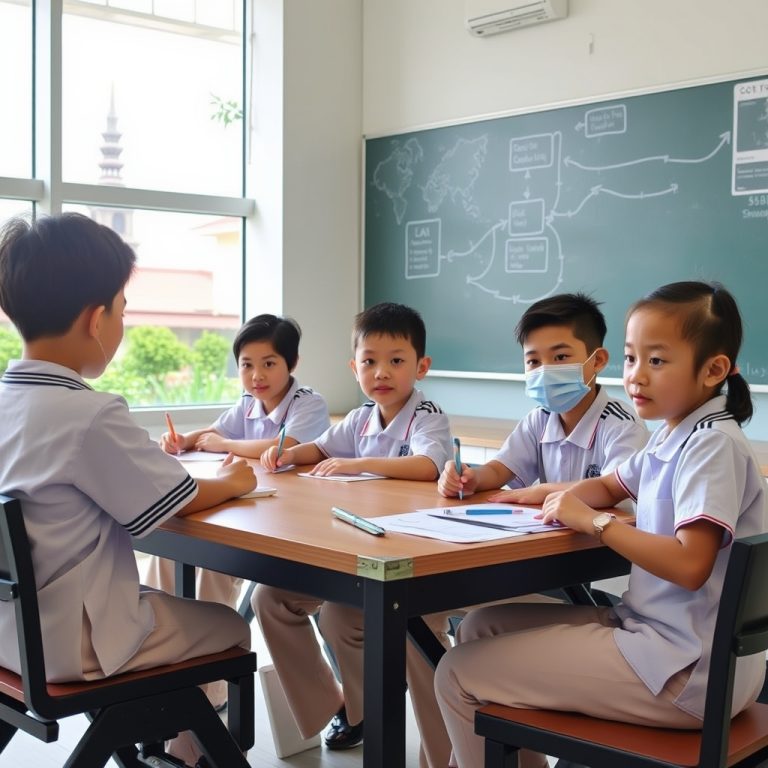
All high school students must complete two 45-minute AI literacy modules annually (NYC Mayor’s Office). Curriculum topics include data privacy, algorithmic bias, and the impacts of AI (GovTech). Critics argue that 90 minutes per year is insufficient for comprehensive AI literacy (Psychology Today). However, deeper pathways are available within career and technical education programs (NYC Schools).
VII. The Five Approved High School Pilot Programs
Only five centrally approved AI tools are allowed, with a cap of 50,000 students (~5% of public-school enrollment) participating (NYC Mayor’s Office). Each pilot program has specific focus areas and guardrails to ensure appropriate usage (edCircit; BetaNYC). The district discontinued 38+ existing AI tools as part of the transition (BetaNYC).
VIII. Connecting AI Literacy to Existing Standards: CSForNY and Beyond
New York’s K-12 Computer Science and Digital Fluency Standards serve as the foundation for AI literacy education (CSForNY). Draft lesson resources aligned to state standards are already being developed (CSForNY). National organizations such as Day of AI offer collaborative tools and resources (Day of AI). The legislative landscape across states shows growing momentum for AI literacy in education (MultiState Insider).
IX. Stakeholder Voices: The Debate Over NYC’s Approach
Supporters — including families and educational leaders — favor structured guidance on AI tools (ABC News). Critics raise concerns about the timing and depth of the literacy program (Psychology Today). Transparency issues have been highlighted regarding the process of developing the policies (Gothamist). Delays in rolling out comprehensive guidance have also been noted (Pursuit).
X. Looking Ahead: What’s Coming Next?
The June 2027 Playbook is expected to provide comprehensive guidance on assessments and AI integration (NYC Schools Guidance). New York state is also refining its AI education policies through ongoing legislative initiatives (ZeroBlue AI). The State University of New York (SUNY) is incorporating AI literacy into its undergraduate curriculum (Pursuit). NYC’s model may influence other districts nationwide (AI Policy Lab). Open questions remain about post-moratorium AI literacy for younger students and how to evaluate outcomes.
XI. Conclusion: A Deliberate Pause in an Age of Acceleration
NYCPS is navigating uncharted waters by simultaneously implementing a moratorium on AI for younger students while fostering AI literacy for high schoolers. The strategic bet aims to ensure foundational skills are nurtured before students engage with advanced technologies, highlighting the challenge of keeping pace with rapidly evolving tools against the realities of students’ out-of-school experiences. Regardless of one’s perspective, the 2026-27 school year will mark a significant chapter in the history of K-12 education in the United States.
Sources
- NYC Mayor’s Office – Mayor Mamdani and Chancellor Samuels Put Students First with Nation’s Strongest AI Protections
- NYC Schools – Guidance on Artificial Intelligence
- EdWeek – 180-Degree Turn: NYC Schools Goes From Banning ChatGPT to Exploring AI’s Potential
- amNY – Editorial: AI and the Classroom
- ZeroBlue AI – New York AI Literacy Profile
- CNN – Nation’s Largest School District Bans AI for Younger Students
- NY1 – NYC DOE Rolls Out Preliminary AI Guidelines
- The74 – NYC Releases Guidelines for AI in Schools; Some Say It Raises More Questions Than It Answers
- Gothamist – NYC Schools Get AI Guidance Using Red-Light, Green-Light Model
- GovTech – NYC Schools Prohibit AI for Grading, Discipline, IEPs
- NYC Schools – Policies on AI and Screen Time
- InnovateEDU – AI Policy Lab
- AI Policy Lab – NYCPS & InnovateEDU Launch AI Policy Lab
- GovTech – NYC Schools Working with Experts to Launch AI Policy Lab
- edCircuit – New York City Schools Ban AI Through Grade 8
- Politico – NYC to Ban Generative AI for Elementary, Middle School Students
- Psychology Today – NYC Keeping AI Out of Schools Doesn’t Prepare Kids for a World That Uses It
- GovTech – NYC Schools Hits Pause on AI, Draws Clear Line on Student Use
- BetaNYC – NYC Paused AI in Its Classrooms; Here Is What te Policy Actually Says
- ABC News – New York City Public School Banning AI Through Middle School
- CSForNY – AI Education Resources
- Day of AI Curiculum Resourcs
- MultiState Insider – How States Are Regulating AI in Education This Legislatie Session
- LinkedIn – NYC Schools Slowing Down on AI; Literacy Can’t Wait Until High School
- Pursuit – AI in Education News: Policies, Innovations, and What’s Next